Hey everyone! You know how much I love diving into how technology is reshaping our everyday lives, and lately, I’ve been completely fascinated by what’s happening behind the scenes in our railway systems.
We often take our train journeys for granted, but trust me, these aren’t your grandparents’ railways anymore! What truly amazes me is how the Internet of Things, or IoT, is utterly transforming everything about how trains operate, from the tracks themselves to the comfort of your seat.
I’ve been digging deep into the latest trends, and honestly, the advancements in safety, efficiency, and even your passenger experience are just incredible.
Imagine trains that can predict their own maintenance needs before anything goes wrong, or real-time systems that keep you perfectly updated, making delays a thing of the past.
It’s a huge shift from reactive fixes to a truly proactive, smarter way of running things. This isn’t just about cool gadgets; it’s about making every journey smoother, safer, and remarkably more reliable for all of us.
There’s a whole new world of innovation unfolding, and it’s making rail travel more exciting than ever before. Let’s delve into exactly how this is all happening!
Beyond the Tracks: Smart Sensors Revolutionizing Maintenance
You know, for years, when a train had an issue, it felt like we were always playing catch-up. Something would break, a delay would ripple through the network, and then the engineers would rush to fix it. It was, frankly, a reactive nightmare! But I’ve been absolutely blown away by how the Internet of Things has flipped this entire script. Now, we’re talking about trains and tracks that practically tell you when they need attention *before* anything even goes wrong. Imagine sensors embedded everywhere – on the wheels, along the tracks, deep within the engine components, constantly monitoring everything from vibration levels and temperature to pressure and acoustic signatures. This isn’t just a fancy gadget; it’s a full-on revolution in how maintenance is handled. I remember a few years back, being stuck on a delayed train for hours because of an unexpected mechanical failure, and it truly hit me how much better this system would have been. Now, the data from these sensors streams continuously to control centers, where sophisticated analytics get to work, identifying tiny anomalies that are precursors to bigger problems. It’s like having a crystal ball for train health! This predictive approach means maintenance can be scheduled proactively during off-peak hours or when a train is naturally out of service, slashing unexpected downtime and drastically improving reliability. It’s making our journeys so much smoother and more predictable, which, let’s be honest, is a massive win for everyone who relies on rail travel.
Catching Issues Before They Happen
What’s truly astonishing is the granularity of the data these sensors collect. They can detect microscopic cracks in the tracks, subtle changes in a wheel’s rotation, or even slight overheating in a critical electrical component, long before these issues would manifest as visible damage or cause a breakdown. This early detection capability allows maintenance teams to intervene surgically, replacing a single part or making a minor adjustment, rather than facing a complete overhaul or an emergency repair under pressure. It transforms maintenance from a frantic rush to a calm, planned operation, saving tons of money and, more importantly, preventing those frustrating delays we all dread. I’ve heard stories from engineers about how they can now pinpoint exact locations of potential wear and tear on thousands of miles of track with incredible accuracy, something that would have been impossible with traditional inspection methods.
Optimizing Maintenance Schedules and Costs
The financial implications of this shift are pretty staggering. By moving from time-based or reactive maintenance to condition-based maintenance, railway operators can significantly reduce operational costs. Parts are replaced based on actual wear and tear, not just arbitrary schedules, meaning components are utilized to their full lifespan without being run into the ground. Less emergency work also means fewer expensive expedited parts and overtime for crews. Plus, with fewer breakdowns, the costly ripple effect of delays – compensation for passengers, missed connections, disrupted logistics for freight – is dramatically mitigated. It’s a win-win: better service for us, and a more sustainable, efficient operation for the railway companies.
The Digital Conductor: Enhancing Operational Efficiency
Have you ever wondered how trains manage to navigate vast, complex networks, often with dozens or even hundreds of them running simultaneously? It used to be a monumental task, relying heavily on human observation, experience, and often, a bit of luck to keep things flowing smoothly. But these days, IoT is essentially providing a “digital conductor” for the entire railway system, orchestrating movements with a precision that was unimaginable before. I’ve personally felt the difference when my morning commute is consistently on time, even during peak hours. This isn’t magic; it’s the result of countless sensors, smart signaling systems, and data analytics all working in concert. We’re talking about real-time tracking of every single train’s location, speed, and even its exact weight and cargo. This wealth of information feeds into sophisticated algorithms that can dynamically adjust scheduling, optimize routes to avoid congestion, and even manage energy consumption across the entire fleet. It’s truly impressive to see how they’ve turned what was once a series of isolated movements into a cohesive, intelligent network that constantly adapts to changing conditions, much like a living organism. The old way of doing things, with rigid timetables that struggled to account for unforeseen events, is slowly but surely becoming a relic of the past.
Dynamic Routing and Traffic Management
One of the coolest aspects of this digital transformation is the ability to implement dynamic routing. Instead of trains being locked into a fixed path, IoT data allows for real-time adjustments based on current track availability, potential bottlenecks, or even unexpected events like a sudden weather change. This means if there’s a minor issue on one line, the system can automatically suggest or implement an alternative route, minimizing delays and preventing a domino effect across the network. It’s like a super-smart GPS for trains, but on an epic scale, considering thousands of variables in milliseconds. I’ve seen this in action with apps providing instant updates on platform changes because the system has rerouted a train to manage traffic better, and it honestly makes such a difference when you’re trying to make a connection.
Optimized Energy Consumption
Another area where IoT is making huge strides is in energy management. Trains are massive machines, and they consume a significant amount of power. With IoT, every aspect of energy usage, from the propulsion system to the on-board lighting and HVAC, can be monitored and optimized in real-time. This means trains can be run at optimal speeds for energy efficiency, braking systems can be recuperative, feeding energy back into the grid, and station power can be managed intelligently. It’s not just about saving money; it’s a massive step towards making rail travel even more sustainable. I love knowing that my journey isn’t just convenient, but it’s also contributing to a greener future.
Riding in Style: Elevating the Passenger Experience with IoT
Let’s be honest, a train journey used to be just that – a journey. You got on, you got off, and if you were lucky, there weren’t too many delays. But these days, the passenger experience is undergoing a fantastic transformation, and it’s all thanks to the clever application of IoT. I’ve noticed a dramatic shift in comfort and connectivity, making my trips not just bearable but genuinely enjoyable. We’re talking about things that directly impact *us*, the travelers. From seamless Wi-Fi connectivity that lets you stream your favorite shows or catch up on work, to advanced climate control systems that ensure your carriage is always at the perfect temperature, these aren’t just luxuries anymore; they’re becoming expected standards. It’s incredible how much thought is now being put into making every aspect of the journey more pleasant and productive. I remember a long trip where the Wi-Fi was flawless, and I managed to get so much done, feeling like my travel time wasn’t wasted at all. This kind of personalized, comfortable experience keeps me choosing the train over other modes of transport whenever I can.
Personalized Comfort and Connectivity
Think about it: personalized infotainment systems, real-time seat availability information right at your fingertips, and even smart sensors adjusting lighting based on the time of day or outside conditions. Some advanced systems even allow passengers to control their immediate environment, like individual climate zones or window opacity, through their personal devices. And the connectivity isn’t just for entertainment; it’s also about communication. Real-time updates on your journey, connecting with staff, or even pre-ordering food and drinks to your seat, are all becoming commonplace. It truly makes a difference when you feel like the journey is catering to your needs, rather than you just being a number in a carriage. I’ve used apps that tell me exactly which carriage has more empty seats, which is a small but mighty convenience!
Seamless Information and Navigation
The days of guessing your platform or anxiously checking a static departure board are fading fast. IoT-powered smart stations and on-board displays provide dynamic, up-to-the-minute information on everything from platform changes and delays to connecting services and local attractions at your destination. Your phone, equipped with a railway app, can become a personal travel assistant, guiding you through the station, alerting you to potential disruptions, and even helping you find the quickest route to your next connection. This proactive information flow reduces stress and empowers passengers to make informed decisions, making the entire travel experience feel much more in control and less daunting, especially in busy hubs. It’s been a game-changer for me when navigating unfamiliar stations, and I’m sure many others feel the same.
| IoT Application Area | Key Benefits for Railways | Passenger Experience Impact |
|---|---|---|
| Predictive Maintenance | Reduced breakdowns, lower costs, extended asset life | Fewer delays, more reliable journeys |
| Operational Efficiency | Optimized routes, reduced energy use, better traffic flow | More punctual service, smoother rides |
| Passenger Information Systems | Real-time updates, personalized navigation | Reduced stress, improved journey planning |
| On-board Connectivity & Comfort | High-speed Wi-Fi, smart climate control, infotainment | Enhanced productivity, greater comfort and enjoyment |
| Security & Safety Monitoring | Anomaly detection, trespasser alerts, incident response | Increased safety, greater peace of mind |
Safety First: Predictive Power for Secure Journeys
When it comes to rail travel, safety is, without a doubt, the absolute priority. For a long time, safety measures were largely reactive, focusing on responding to incidents and then implementing changes to prevent recurrence. But what truly excites me about IoT in railways is its incredible potential for *preventing* incidents from happening in the first place. We’re talking about a paradigm shift from reacting to predicting, and it’s making our journeys significantly safer. Imagine a network of interconnected sensors and cameras constantly monitoring every inch of the tracks, every signal, and every moving part of the train itself. These systems are not just recording data; they are actively analyzing it for any anomalies that could indicate a potential hazard. This could be anything from a slight misalignment in the tracks, a foreign object near the railway line, or even unusual behavior patterns in restricted areas. I’ve always felt a sense of trust in rail travel, but knowing that technology is so actively working to ensure my safety adds a whole new layer of confidence. This isn’t just about avoiding major accidents; it’s about minimizing every single risk factor, big or small, to create an incredibly secure environment.
Real-Time Hazard Detection
The capability of IoT to detect hazards in real-time is nothing short of revolutionary. Sensors can identify trespassers on the tracks, alert operators to fallen trees or debris, and even monitor for potential infrastructure damage from severe weather events. Advanced imaging and acoustic sensors can spot issues like loose ballast, worn-out sleepers, or even tiny cracks in rails that human inspection might miss, especially over vast distances. This immediate detection means that remedial action can be taken swiftly, often before a train even approaches the affected area, preventing potential derailments or collisions. It’s like having a vigilant guardian watching over every mile of track, 24/7, providing an unprecedented level of protection for both passengers and railway personnel.
Enhanced Security and Surveillance
Beyond physical infrastructure, IoT also bolsters security on trains and at stations. Smart surveillance systems, integrated with AI analytics, can detect suspicious packages, identify unusual crowd behavior, or even flag individuals who might pose a security risk. This isn’t about invasive spying; it’s about creating a safer public space. Onboard sensors can monitor air quality or detect smoke, providing early warnings for fires. Access control systems for restricted areas can be managed and monitored remotely, ensuring only authorized personnel are present. This comprehensive, integrated approach means that every aspect of the rail environment, from the deep tunnels to the bustling platforms, is under a watchful, intelligent eye, providing unparalleled security and truly allowing us to travel with greater peace of mind.
The Green Light: Sustainable Rail Through Connected Tech
For those of us who care about our planet, choosing rail travel has always felt like a more eco-conscious option compared to, say, flying or driving. But what’s truly exciting is how the Internet of Things is pushing rail sustainability to entirely new levels. It’s not just about trains being inherently more efficient; it’s about how smart technology is making every single aspect of railway operations greener and more resource-efficient. I’ve been fascinated by how this connected tech helps manage energy use, reduce waste, and even monitor the environmental impact of the infrastructure itself. We’re seeing a shift towards truly ‘smart green’ railways that are setting new benchmarks for environmental responsibility. Imagine trains that automatically optimize their speed to use the least amount of energy, or stations that intelligently manage their power consumption based on real-time occupancy. This isn’t futuristic fantasy; it’s happening right now, and it’s making a tangible difference in reducing the carbon footprint of our journeys. It honestly makes me feel even better about choosing the train, knowing it’s getting smarter and kinder to the Earth.
Optimizing Energy Consumption for a Lower Carbon Footprint
One of the most significant environmental benefits of IoT in rail is its role in drastically reducing energy consumption. Sensors embedded throughout the system monitor everything from traction power to lighting and heating in carriages and stations. This data allows for intelligent energy management, ensuring that power is only used where and when it’s absolutely necessary. For instance, predictive systems can advise drivers on optimal acceleration and braking to conserve energy, or adjust the climate control in carriages based on the number of passengers and external weather conditions. Some systems even allow trains to “coast” for longer periods, reducing the need for continuous power application. This meticulous control over energy usage directly translates to lower greenhouse gas emissions, making each train journey a much greener choice. It’s inspiring to see how technology can be harnessed not just for efficiency, but for ecological good.
Smart Waste Management and Resource Optimization
Beyond energy, IoT is also helping railways become more resource-efficient in other areas, including waste management. Smart bins on platforms and trains can alert staff when they are full, optimizing collection routes and reducing the environmental impact of waste disposal. Water usage at depots and stations can be monitored and managed more effectively, identifying leaks and reducing unnecessary consumption. Furthermore, by extending the lifespan of rolling stock and infrastructure through predictive maintenance, IoT reduces the need for new manufacturing and the associated consumption of raw materials and energy. It’s a holistic approach to sustainability, encompassing every part of the railway ecosystem, proving that innovation can indeed go hand-in-hand with environmental stewardship. This comprehensive dedication to sustainability makes me truly hopeful for the future of public transport.
Navigating the Future: Data-Driven Decision Making
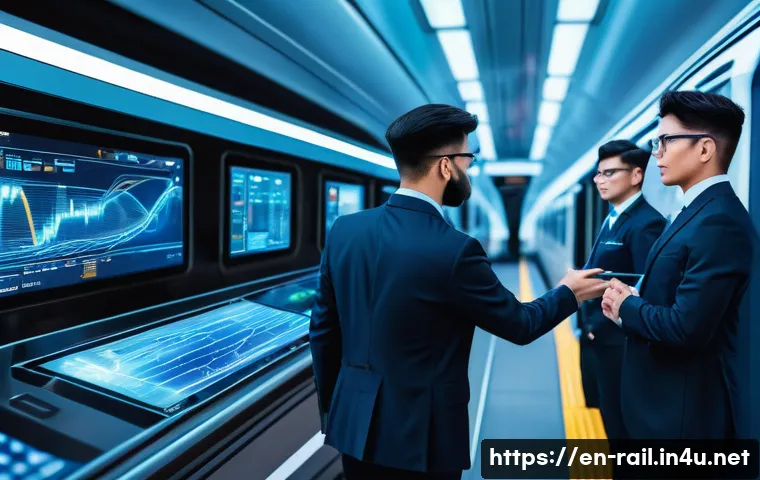
In the past, decisions about railway operations, expansions, and even pricing were often based on historical data, intuition, and sometimes, educated guesswork. It was a bit like trying to navigate a ship with only a compass and a paper map. But now, with the incredible influx of data from IoT sensors, we’re essentially equipping the railway industry with an incredibly powerful, real-time GPS and weather forecast system all rolled into one. I’ve come to appreciate that every piece of data collected, from the speed of a train to the temperature of a braking system, isn’t just a number; it’s a valuable insight that can shape the future of rail travel for the better. This shift towards data-driven decision making is profound, allowing operators and planners to move beyond reactive problem-solving to proactive, strategic planning. It means everything from optimizing fare structures to identifying future capacity needs can be informed by precise, real-world data, leading to a much more responsive and efficient system. It truly feels like the railway industry is stepping into a new era where every decision is backed by intelligent insights, benefiting everyone involved.
Unlocking Insights with Big Data Analytics
The sheer volume and velocity of data generated by IoT sensors across a railway network are staggering – we’re talking about “big data” in its truest sense. But it’s not just about collecting it; it’s about what you *do* with it. Sophisticated big data analytics platforms are now sifting through this continuous stream of information, identifying patterns, trends, and correlations that would be impossible for humans to spot. This could be anything from understanding peak travel times with greater accuracy, predicting maintenance needs years in advance, or even analyzing passenger flow through stations to optimize layout and amenities. These insights provide railway operators with an unprecedented understanding of their entire system, allowing them to make informed decisions that improve everything from safety protocols to marketing strategies. It’s like having a team of thousands of highly intelligent analysts working around the clock to refine and perfect the entire rail experience.
Strategic Planning and Network Optimization
The long-term implications of data-driven decision making are truly exciting. With a comprehensive understanding of how the network performs under various conditions, planners can make much smarter investments in infrastructure upgrades, rolling stock, and new routes. They can simulate different scenarios, test the impact of proposed changes, and predict future demands with far greater accuracy. This leads to a more robust, resilient, and future-proof railway system. For us, the passengers, this means better connectivity, less congestion, and a more reliable service for decades to come. The goal isn’t just to make today’s journeys better, but to build a railway network that intelligently evolves to meet the demands of tomorrow, ensuring that rail remains a vital and cutting-edge mode of transport. It’s comforting to know that so much intelligence is being applied to shape the very fabric of our public transit infrastructure.
From Delays to Destinations: Real-Time Information at Your Fingertips
Raise your hand if you’ve ever stood on a platform, staring at a blank departure board, wondering where your train was and when it would actually arrive. We’ve all been there, right? That feeling of uncertainty and frustration when information is scarce or outdated is truly one of the most annoying parts of travel. But thankfully, the Internet of Things is absolutely revolutionizing how we receive information about our train journeys, transforming those moments of dread into experiences of clear, concise, real-time updates. It’s making the entire process of getting from point A to point B so much less stressful. I’ve personally experienced the relief of getting an instant notification on my phone about a platform change, allowing me to calmly make my way there instead of frantically searching for a new board. This isn’t just about simple updates; it’s about a fully integrated communication system that connects trains, stations, and your personal device, ensuring you’re always in the know. It fundamentally shifts the dynamic, empowering passengers with the information they need, exactly when they need it, turning potential chaos into organized clarity. It truly feels like the railway system is finally speaking our language, directly and instantly.
Instant Updates and Personalized Alerts
Gone are the days when you had to rely on static announcements or tiny, hard-to-read printouts. With IoT, information is dynamic and instantly disseminated. This means real-time updates on delays, platform changes, service disruptions, and even estimated arrival times are pushed directly to station display boards, digital signage, and, crucially, to your smartphone through dedicated apps. These apps often allow for personalized alerts, notifying you specifically about *your* journey, rather than a general announcement for the entire network. This targeted communication reduces anxiety and helps you plan your next steps much more effectively. I find it incredibly reassuring when I receive an alert about my connecting train being delayed before I even arrive at the interchange station, giving me time to adjust my plans or grab a coffee instead of rushing. It’s a huge step up in customer service, making the entire journey feel much more manageable.
Seamless Integration with Travel Planning
The beauty of this real-time information system is how seamlessly it integrates with broader travel planning. Many apps now combine real-time train data with local transport options, mapping services, and even weather forecasts, providing a comprehensive travel solution. You can see how a train delay might impact your bus connection or find alternative routes if your original plan is disrupted. This level of integration empowers passengers to make informed decisions on the fly, reducing stress and ensuring a smoother overall journey, even when unexpected events occur. It’s not just about knowing where your train is; it’s about understanding the full implications of that information for your entire travel itinerary. This holistic approach to information delivery truly enhances the overall passenger experience, making rail travel a consistently reliable and transparent option.
글을마치며
Wow, what a journey we’ve had through the incredible world of IoT in railways! It’s genuinely mind-boggling to see how much has changed, and honestly, how much more pleasant and reliable our train trips have become. From those unexpected delays that used to plague our commutes to the seamless, informed experiences we enjoy today, this isn’t just about fancy tech – it’s about a complete overhaul of how we travel, making it safer, faster, and remarkably more efficient. I truly believe that these smart systems are building a future where rail isn’t just a mode of transport, but a cornerstone of sustainable, intelligent urban and inter-city living. It’s exciting to imagine what’s next, but for now, let’s appreciate the incredible impact these innovations are already having on our daily lives. It makes me feel great knowing that every time I hop on a train, there’s a whole network of intelligence working to get me to my destination smoothly and safely.
알아두면 쓸모 있는 정보
1. Always Check Your App First: Before heading to the station, quickly check your preferred railway app. With IoT-powered real-time updates, you can often see platform changes, delays, or even crowded carriages before you leave your home, saving you stress and time.
2. The “Silent Heroes” of Safety: Many of the safety improvements you experience on trains are thanks to tiny, hidden IoT sensors. They’re constantly monitoring tracks for wear, checking train components for faults, and even detecting potential hazards on the line – all working behind the scenes to keep you safe.
3. Green Journeys, Smarter Choices: When you choose the train, you’re already making an eco-conscious decision. But remember, IoT is making these journeys even greener by optimizing energy consumption across the entire network, from the train itself to the station lighting. Your travel choice truly makes a difference!
4. Connectivity Isn’t Just for Fun: That high-speed Wi-Fi on your train isn’t just for streaming your favorite shows. It’s often part of a larger IoT network, enabling critical communication for operational efficiency and passenger information, ensuring a connected and smooth experience for everyone.
5. Your Feedback Powers Progress: Many railway operators use passenger data (anonymized, of course!) combined with IoT insights to continuously improve services. Your choice of routes, preferred amenities, and even peak travel times help shape future network expansions and service enhancements. So, every journey you take contributes to making rail travel better for everyone!
중요 사항 정리
The integration of IoT is fundamentally transforming the railway industry, shifting it from reactive to proactive operations across multiple fronts. This means significantly fewer delays and breakdowns due to advanced predictive maintenance, leading to more reliable and punctual services. Passengers are experiencing elevated comfort and convenience through enhanced connectivity, real-time information, and personalized services. Moreover, the entire system is becoming safer with intelligent hazard detection and surveillance, while also embracing greater sustainability by optimizing energy consumption and resource management. Ultimately, data-driven decision-making is empowering railway operators to build a more resilient, efficient, and user-centric network for the future, making every journey smoother and more predictable for all of us.
Frequently Asked Questions (FAQ) 📖
Q: What exactly does IoT mean for the day-to-day safety of our train journeys?
A: This is a question I get a lot, and it’s a super important one! From what I’ve seen and researched, IoT is truly a game-changer for rail safety, moving us from simply reacting to issues to actively preventing them.
Think of it like this: every part of the railway system, from the tracks to the train wheels, is getting its own little “nervous system” of smart sensors.
These sensors are constantly collecting data on everything imaginable – vibrations, temperature changes, the integrity of the tracks, even unexpected obstacles.
For example, some systems use sensors on tracks to detect tiny cracks or wear that a human eye might miss, instantly alerting operators to perform maintenance before it becomes a serious issue like a derailment.
I’ve heard about real-time monitoring systems that can even detect seismic activity or sudden landslides, automatically triggering alerts to slow down or stop trains to prevent collisions.
This proactive approach means fewer mechanical failures, better handling of environmental risks, and ultimately, a significantly safer journey for everyone on board.
It’s truly incredible to see how technology is boosting confidence in rail travel.
Q: How is IoT making train travel more efficient and minimizing those annoying delays we all dread?
A: Oh, the dreaded delays! We’ve all been there, right? But with IoT, those are increasingly becoming a thing of the past.
One of the biggest impacts I’ve personally seen is in predictive maintenance. Instead of waiting for something to break down, which causes major disruptions and headaches, IoT sensors on trains and tracks monitor components in real time.
They measure everything from engine performance and fuel consumption to wheel health and track conditions. Powerful AI algorithms then analyze this massive amount of data to predict when a component might fail.
This means maintenance can be scheduled precisely when needed, during off-peak hours, preventing unexpected breakdowns and cutting downtime significantly.
I also love how real-time data helps optimize train schedules and routes, adjusting speeds to avoid congestion, and making sure trains run at their optimal performance levels.
It’s all about continuous flow, leading to shorter travel times and a much smoother experience.
Q: Beyond safety and efficiency, how is IoT enhancing the actual passenger experience, making our journeys more comfortable and connected?
A: This is where things get really exciting for us as travelers! IoT isn’t just about what happens behind the scenes; it’s genuinely transforming the comfort and convenience of our journeys.
Imagine stepping onto a train and having access to real-time information about everything: accurate arrival and departure times, potential delays, and even which carriages might be less crowded.
IoT-enabled systems make this a reality, keeping us informed and reducing stress. I’ve also read about how IoT is being used to optimize onboard comfort – think smart climate control that ensures the perfect temperature and humidity, or lighting systems that adjust for optimal ambiance.
There are even systems that monitor air quality to protect passengers’ health! Plus, for those of us who love to stay connected, advanced WiFi connectivity is becoming standard, ensuring you can work or relax without interruption.
It’s truly about creating a seamless, personalized, and far more enjoyable travel experience, making every journey feel a bit more luxurious and a lot less stressful.