You know, when I think about how much we rely on trains every single day, whether it’s for that quick commute into the city or for hauling essential goods across the country, it really hits home how absolutely critical railway safety is.
We’ve all heard those unsettling news stories, haven’t we? It makes you wonder what goes on behind the scenes to keep those massive machines running smoothly and safely.
But let me tell you, from what I’ve seen and learned, the advancements in railway safety are truly incredible, constantly evolving to stay ahead of potential dangers.
It’s not just about bigger brakes or stronger tracks anymore; we’re talking about a whole new era of innovative solutions that are actively preventing accidents and making train travel more secure than ever before.
The rail industry has actually made significant strides, with overall train accident rates decreasing by 27% since 2000 in the U.S., and employee injury rates hitting an all-time low in 2023.
Imagine trains that can essentially “see” and “think,” predicting issues before they even become a problem. That’s not science fiction anymore; it’s the reality with AI and IoT leading the charge.
Railway companies are pouring billions into infrastructure, equipment, and cutting-edge safety technologies, aiming for a future where every journey is seamless and worry-free.
It’s truly inspiring to see how technology, combined with dedicated human expertise, is forging a path towards even safer railway systems globally. I’ve personally been fascinated by the sheer dedication to proactive maintenance and the continuous development of sophisticated monitoring systems that are literally saving lives and preventing disruptions daily.
Let’s dive into the details and uncover how these remarkable efforts are shaping the future of railway safety.
The Unseen Guardians: Predictive Maintenance and IoT
You know, it’s truly astounding when you realize just how much goes on behind the scenes to keep our railways running safely and smoothly. I’ve always been fascinated by the sheer scale of it, and lately, the leaps in predictive maintenance powered by the Internet of Things (IoT) have completely blown me away. Imagine a vast network of tiny, smart sensors scattered across thousands of miles of track, on every train carriage, and even within the very infrastructure itself. These aren’t just passive monitors; they’re constantly collecting data—everything from subtle vibrations in the tracks to the exact temperature of a wheel bearing. This torrent of real-time information is then funneled into sophisticated AI algorithms, which act like hyper-vigilant guardians, predicting potential issues long before they ever become a problem. It’s no longer about waiting for something to break and then fixing it; it’s about anticipating that break with incredible accuracy and intervening proactively. I’ve heard countless stories of how this has prevented major disruptions and, more importantly, averted potential accidents by flagging minor anomalies that would have been impossible to detect otherwise. It’s like giving the entire rail network a sixth sense, allowing maintenance crews to act strategically and efficiently, minimizing downtime and maximizing safety for everyone.
Smart Sensors: The Eyes and Ears of the Network
Diving a bit deeper into this, the sophistication of these smart sensors is just phenomenal. We’re talking about devices that can detect microscopic cracks in rails, pinpoint slight misalignments in track geometry, or even monitor the integrity of bridges in real-time. Acoustic sensors listen for tell-tale sounds of wear and tear in mechanical components, while thermal imaging spots overheated parts that could indicate imminent failure. These aren’t just standalone units; they form an intricate web, communicating with each other and a central system. For example, a sensor on a train might detect an unusual vibration, and simultaneously, a trackside sensor might report a slight change in rail condition. When these data points converge, the system immediately flags a potential issue, allowing for quick investigation. It’s a proactive approach that moves us light-years beyond traditional, time-based inspections. I’ve personally seen how railway companies are investing heavily in these integrated systems, and the returns in terms of enhanced safety and operational efficiency are simply undeniable. It’s truly the eyes and ears, constantly vigilant, ensuring every journey is as secure as possible.
Forecasting the Future: AI in Maintenance Scheduling
Now, gathering all this data is one thing, but making sense of it and turning it into actionable insights is where Artificial Intelligence truly shines. This isn’t just about simple alerts; we’re talking about complex machine learning models that analyze historical data, current conditions, and even environmental factors to create incredibly accurate forecasts for maintenance needs. I’ve been told by engineers that these AI systems can predict when a specific component on a train will likely fail, or when a section of track will require attention, often months in advance. This allows maintenance teams to schedule interventions precisely when they are needed, rather than on a fixed calendar, which often leads to either premature replacements or, worse, unexpected failures. This intelligent scheduling optimizes resources, reduces costs, and significantly improves safety by preventing equipment degradation from reaching critical levels. For me, the real magic is how AI translates raw data into a crystal ball for railway operations, enabling a truly proactive and preventative safety culture. It truly makes you realize how much brainpower is going into ensuring our safety every single day.
High-Tech Eyes on the Tracks: Advanced Sensor Networks
Beyond the internal workings of trains and the broad IoT network, the tracks themselves are under constant, intense scrutiny thanks to advanced sensor networks. I mean, think about it – the tracks are the very foundation of safe rail travel, and any imperfection can have serious consequences. What I’ve found utterly fascinating is how today’s systems leverage multiple technologies to create a comprehensive picture of track health. It’s not just about one type of sensor, but a symphony of detection working in concert. We’re talking about laser scanning systems that map track geometry down to the millimeter, ultrasonic detectors that peer inside the rails for internal flaws, and even ground-penetrating radar to assess the stability of the sub-ballast. This multi-layered approach ensures that nothing is left to chance, catching potential problems like rail breaks or structural weaknesses that would have been incredibly difficult, if not impossible, to detect with older methods. It truly makes me feel a lot more confident about hopping on a train, knowing this level of detail is being constantly monitored.
Thermal Imaging and Anomaly Detection
One of the coolest applications I’ve come across is the use of thermal imaging for anomaly detection. It sounds a bit futuristic, right? But it’s already a critical part of modern railway safety. High-resolution thermal cameras are mounted on inspection trains or even strategically placed along the tracks. These cameras can detect minute temperature variations that are invisible to the naked eye. For instance, an overheated wheel bearing on a passing train will stand out like a beacon, signaling a component under stress that could lead to a serious mechanical failure if left unaddressed. Similarly, abnormal heat patterns on the track itself could indicate a developing rail defect or even an electrical short. The beauty of this technology is its ability to provide early warnings, giving maintenance crews ample time to intercept and repair the issue before it escalates into a dangerous situation. I always think about how many potential accidents have been quietly averted thanks to these silent, heat-sensing guardians.
Geospatial Intelligence for Track Integrity
Another powerful tool in the arsenal is geospatial intelligence. This isn’t just about looking at a map; it’s about integrating satellite data, drone imagery, and precise GPS coordinates with sensor readings to create a dynamic, 3D model of the railway environment. This allows operators to monitor changes in terrain, detect potential landslides near the tracks, or even track vegetation growth that could obscure signals or impact visibility. When combined with data from on-track sensors, geospatial intelligence provides an unparalleled overview of track integrity and its surrounding environment. For example, if ground-penetrating radar detects a void beneath the tracks, and satellite imagery shows recent heavy rainfall in the area, the system can quickly flag that specific section for urgent inspection. It’s about understanding the bigger picture and how various environmental and structural factors interact to influence safety. From my perspective, it’s this holistic approach that truly elevates railway safety to a new level.
Human Element, Enhanced: Training and Ergonomics
Even with all the cutting-edge technology, let’s not forget the incredible people who operate and maintain our rail systems. Their expertise and judgment remain absolutely vital. What’s truly inspiring is how the industry is enhancing the human element through advanced training and ergonomic design, recognizing that a well-prepared and comfortable operator is a safer operator. I’ve always admired the intense focus required to drive a train, and it’s clear that railway companies are prioritizing making that demanding job as safe and efficient as possible. This isn’t just about sitting in a classroom; it’s about immersive experiences that build real-world skills and ensure peak performance under pressure. Investing in the people behind the controls is just as crucial as investing in the technology itself, because ultimately, it’s a synergistic relationship that delivers the safest outcomes.
Simulations and Immersive Learning
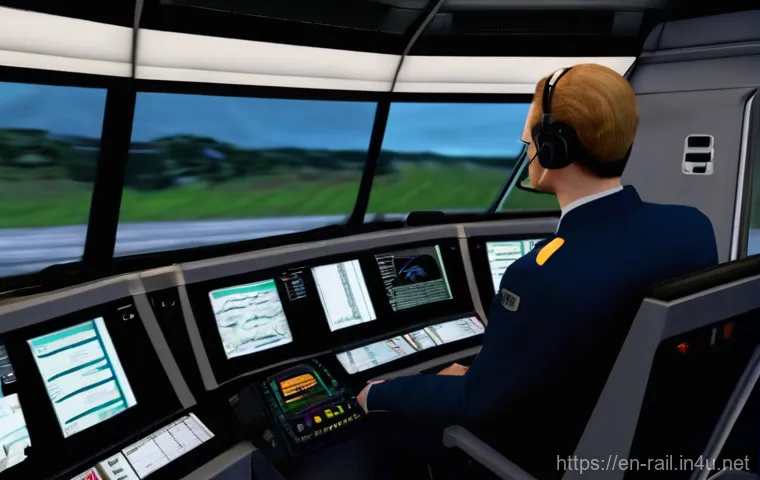
The days of learning solely on the job or from textbooks are largely behind us in the rail industry. Today, training involves highly sophisticated simulations that are almost indistinguishable from the real thing. I’m talking about full-motion train cab simulators that replicate every aspect of driving a locomotive, from adverse weather conditions to unexpected track obstructions. Trainees can experience a wide array of scenarios, including emergency braking, signal failures, and even coupling maneuvers, all in a safe and controlled environment. This allows them to develop muscle memory and critical decision-making skills without any risk. Beyond engineers, ground crews and maintenance teams also use augmented and virtual reality tools to practice complex repair procedures or navigate hazardous environments. It’s like a pilot training for thousands of hours before ever flying a real plane; these immersive learning experiences build confidence and competence, ensuring that when a challenging situation arises, the human response is swift, precise, and effective. It’s truly incredible to see how technology is empowering people to be their best.
Ergonomic Design for Operator Wellness
You might not think much about it, but the design of a train’s control cab plays a massive role in operator safety and alertness. This is where ergonomics comes in, ensuring that the working environment is optimized for human comfort, efficiency, and to minimize fatigue. I’ve noticed how much thought goes into things like seat design, the placement of controls, and even lighting within modern train cabs. It’s not just about luxury; it’s about reducing strain on the operator, ensuring that all critical information is easily visible, and that controls are intuitive to use, even during long shifts. Minimizing physical discomfort and cognitive load directly translates to reduced chances of human error. Think about it: a well-rested, comfortable, and focused engineer is far more likely to respond correctly to unexpected events. This attention to operator wellness is a testament to the industry’s holistic approach to safety, acknowledging that the human factor is paramount and deserving of continuous improvement.
Beyond the Rails: Protecting Crossings and Communities
While we often focus on what happens on the tracks, a significant portion of railway safety concerns involve what happens *around* them, particularly at grade crossings where roads meet rails. These are points of potential conflict, and honestly, the news stories about accidents at crossings are always the most heartbreaking. It’s a complex challenge, involving not just technology but also public awareness and community engagement. The rail industry has been relentlessly working to enhance safety at these crucial intersections, understanding that a lapse here can have devastating consequences for motorists, pedestrians, and train occupants alike. It truly takes a concerted effort from all sides to ensure these areas are as safe as possible for everyone, and it’s something I think about every time I drive across a railway track.
Intelligent Crossing Systems
The evolution of grade crossing technology is genuinely impressive. Gone are the days of just basic flashing lights and lowering gates. Today, we have intelligent crossing systems that leverage advanced sensors to detect approaching trains with greater accuracy and provide more timely warnings. Some systems even incorporate radar or lidar to detect vehicles or pedestrians on the tracks, triggering enhanced warnings or even communicating directly with approaching trains. There are also predictive algorithms that analyze train speed, weather conditions, and road traffic patterns to adjust warning times, ensuring that gates are down only for as long as necessary, minimizing driver frustration and the temptation to bypass them. I’ve noticed a lot of innovation in making these systems more resilient and redundant, meaning if one component fails, there’s a backup to ensure warnings are still given. It’s all about creating an unbreakable chain of safety at these critical junctures.
Community Engagement for Safety Awareness
Technology alone isn’t enough; human behavior plays a massive role at grade crossings. This is where community engagement and public awareness campaigns become absolutely vital. Organizations like Operation Lifesaver in the U.S. and similar initiatives globally work tirelessly to educate people about the dangers of disregarding crossing signals, walking on tracks, or engaging in risky behaviors near railway lines. They use powerful messaging to remind people that trains are faster and quieter than they appear, and that trespassing on railway property is not only illegal but incredibly dangerous. I’ve seen firsthand how these campaigns, often involving local law enforcement and community leaders, can make a real difference in fostering a culture of safety around railways. It’s about building awareness, changing habits, and ultimately, saving lives through education. It really underscores that safety isn’t just about what the industry does, but also about the choices we all make.
Navigating the Digital Age: Cybersecurity for Rail Systems
In our increasingly interconnected world, it might not be the first thing you think of when you consider railway safety, but cybersecurity has become an absolutely critical component. As railway systems become more digitized, relying on complex networks for signaling, communication, and operational control, they also become potential targets for cyberattacks. Honestly, this is something I hadn’t considered much until recently, but the more I learn, the more I realize just how important it is. Imagine the chaos and danger if a malicious actor could disrupt train signaling or take control of critical infrastructure. It’s a sobering thought, and thankfully, the rail industry is taking this threat incredibly seriously, investing heavily in robust cybersecurity measures to protect these vital national assets.
Shielding Critical Infrastructure
Protecting critical railway infrastructure from cyber threats involves a multi-layered defense strategy, much like fortifying a digital fortress. This means everything from securing operational technology (OT) networks that control trains and signals, to protecting the IT systems that manage scheduling and passenger information. We’re talking about advanced firewalls, intrusion detection systems, and encryption protocols that safeguard sensitive data and prevent unauthorized access. Regular penetration testing and vulnerability assessments are conducted to identify and patch potential weaknesses before they can be exploited. It’s a continuous battle against a constantly evolving threat landscape, requiring vigilance and significant investment. I’ve heard experts describe it as an ongoing arms race, where defense mechanisms must always stay a step ahead of potential attackers. It’s truly fascinating to see this new dimension of safety being so rigorously addressed.
Responding to Digital Threats
Beyond prevention, having a robust incident response plan for cybersecurity breaches is equally important. It’s not just about preventing attacks, but also about being able to quickly detect, contain, and recover from them if they do occur. This involves dedicated cybersecurity teams monitoring networks 24/7, ready to spring into action at the first sign of an anomaly. These teams work hand-in-hand with operational staff to ensure that any potential cyber incident doesn’t compromise physical safety. Think of it like a rapid-response unit, trained to mitigate damage and restore normal operations as swiftly as possible. This proactive approach to both prevention and response ensures that even in the face of sophisticated digital threats, the integrity and safety of our railway systems remain uncompromised. It’s a testament to how adaptable and forward-thinking the industry has become in safeguarding our journeys.
Innovation On Board: Smart Carriages and Passenger Safety
When I travel by train, I always appreciate how far passenger safety has come. It’s not just about the external track infrastructure or the controls in the locomotive; it’s also about what’s happening *inside* the carriages themselves. Modern trains are essentially rolling smart environments, equipped with a host of technologies designed specifically to enhance passenger safety and comfort. This includes everything from advanced fire detection systems that can pinpoint the exact location of a heat source, to sophisticated communication tools that keep passengers informed and connected. It truly gives me peace of mind knowing that these innovations are constantly being integrated to make every journey as secure and worry-free as possible. It’s clear that the focus on safety extends to every single aspect of the rail experience, right down to the seats we sit in.
Real-time Monitoring of Train Conditions
Today’s smart carriages are packed with sensors that continuously monitor various internal conditions in real-time. This isn’t just for comfort, but crucially for safety. For example, sensors can detect sudden changes in air pressure, which might indicate a potential issue with the train’s integrity or external environment. Temperature and humidity sensors help maintain a safe and comfortable environment, but also play a role in detecting anomalies that could signal a problem. Perhaps most importantly, advanced fire detection systems use a combination of smoke, heat, and flame sensors to quickly identify and alert crew members to potential fires, initiating automatic suppression systems in some cases. This constant, vigilant monitoring means that any deviation from normal operating parameters is immediately flagged, allowing for swift action before a minor issue escalates into a major safety concern. It’s like having a dedicated safety guardian for every carriage.
Emergency Systems and Communication
Beyond monitoring, modern trains are designed with robust emergency systems and clear communication channels. Every carriage is equipped with emergency exits and clear signage, often illuminated in low light. Emergency braking systems are strategically located, accessible to both crew and, in some dire situations, passengers. What truly impresses me is the evolution of communication systems. Passengers can easily contact train staff through intercoms, and in turn, staff can make announcements across the entire train, providing clear instructions and updates during any incident. Furthermore, many newer trains have integrated Wi-Fi and even satellite communication capabilities, ensuring that contact with external emergency services is maintained even in remote areas. This focus on seamless communication is critical during an emergency, ensuring that everyone is informed and that help can be coordinated efficiently. It really highlights how passenger well-being is at the forefront of modern train design.
The Power of Data: Analytics Driving Safer Operations
We’ve talked a lot about all the amazing data being collected by sensors and IoT devices, but gathering data is only half the battle. The real magic, for me, happens when that raw data is transformed into actionable intelligence through powerful analytics. It’s like the entire railway system is constantly learning from every single journey, every sensor reading, and every incident, no matter how minor. This continuous feedback loop is what truly propels railway safety forward, turning insights into proactive strategies. This isn’t just about looking at numbers; it’s about understanding complex patterns and predicting future outcomes, allowing the industry to evolve and adapt faster than ever before. It’s truly a testament to the power of big data when applied to such a critical field, making every decision more informed and every journey safer.
Mining Insights from Millions of Data Points
Imagine millions, if not billions, of data points flowing in daily from every corner of the railway network: track sensors, train diagnostics, weather patterns, traffic movements, maintenance records, and even historical incident reports. Traditional analysis methods would drown in such a sea of information. But with advanced data analytics and machine learning, this vast dataset becomes a goldmine of insights. Algorithms can identify subtle correlations and trends that human eyes might miss, revealing underlying causes of issues or predicting potential vulnerabilities. For instance, analyzing track temperature data alongside train axle loads over time might reveal specific sections prone to faster wear. Or, correlating minor signal malfunctions with specific environmental conditions could lead to preventative maintenance during those conditions. This deep dive into the data allows railway operators to understand the ‘why’ behind events and to make truly informed decisions that enhance safety across the board. It’s like having an all-seeing eye that distills complexity into clarity.
Continuous Improvement Through Feedback Loops
The beauty of this data-driven approach is the establishment of a continuous improvement feedback loop. It’s not a static system; it’s dynamic and constantly evolving. Every new piece of data, every maintenance intervention, and every operational adjustment feeds back into the analytics engine. This allows the system to refine its predictions, optimize maintenance schedules further, and even recommend adjustments to operational protocols. For example, if a new type of sensor is installed and its data helps prevent a specific type of incident, that success is then integrated into the system’s knowledge base, informing future strategies. This iterative process ensures that safety standards are not only maintained but are continuously elevated. From my perspective, this commitment to constant learning and adaptation, driven by intelligent data analysis, is one of the most exciting aspects of modern railway safety. It’s about building a safer future, one data point at a time.
| Safety Aspect | Traditional Approach | Modern Tech-Driven Approach |
|---|---|---|
| Track Monitoring | Manual visual inspections, scheduled checks, reactive repairs. | IoT sensors (acoustic, thermal, vibration), laser scanning, ground-penetrating radar, AI-driven anomaly detection, predictive maintenance. |
| Train Condition | Pre-departure checks, scheduled maintenance, fault diagnosis after failure. | On-board diagnostics, real-time sensor data (bearings, brakes, engine), AI for predictive component failure, remote monitoring. |
| Grade Crossings | Flashing lights, barrier gates, static warning signs. | Intelligent sensors for vehicle/pedestrian detection, dynamic warning systems, predictive train arrival times, communication with external entities. |
| Operator Training | Classroom instruction, on-the-job experience. | Full-motion simulators, VR/AR immersive training, scenario-based learning, continuous professional development. |
| Security | Physical security measures, limited IT security. | Multi-layered cybersecurity for OT/IT, intrusion detection systems, encryption, incident response teams, threat intelligence. |
Wrapping Things Up
Wow, what a journey we’ve been on, exploring the incredible world of modern railway safety! From the tiniest smart sensors whispering secrets from the tracks to the complex AI brains forecasting maintenance needs, it’s truly a testament to human ingenuity and dedication. What strikes me most, after diving into all this, is the powerful synergy between cutting-edge technology and the unwavering commitment of the people who operate and maintain these vast networks. It’s not just about flashy gadgets; it’s about a holistic, constantly evolving approach where every innovation, every piece of data, and every human decision works in concert to ensure our journeys are not just efficient, but exceptionally safe. This truly makes me feel incredibly confident about stepping onto a train, knowing that an invisible army of “unseen guardians” is constantly at work, ensuring everything runs smoothly, securely, and with our well-being as the absolute top priority. It’s a marvelous blend of machines and minds, all dedicated to getting us where we need to go, safely and soundly.
Handy Insights to Keep in Mind
1. Predictive Maintenance: A Game Changer Beyond Railways
What we’ve seen in the railway sector with predictive maintenance using IoT isn’t an isolated marvel; it’s a revolutionary trend reshaping countless industries. Think about it: factories are using similar sensor networks to predict when machinery might fail, preventing costly downtime. Even in our homes, smart appliances are beginning to anticipate maintenance needs before they become major headaches. This shift from reactive repairs to proactive prevention is a massive step forward, saving resources, boosting efficiency, and crucially, enhancing safety across the board. It truly makes you wonder where else this incredible foresight will be applied next, transforming how we interact with technology and infrastructure in our daily lives.
2. The Everyday Impact of IoT and AI
While we focused on trains, the concepts of IoT and AI are increasingly weaving into the fabric of our everyday lives. From smart traffic lights that adapt to real-time flow, reducing congestion and accidents, to wearable tech that monitors our health and alerts us to potential issues, the same principles of data collection and intelligent analysis are at play. It’s a reminder that the technologies making our railways safer are also quietly contributing to a smarter, more responsive, and ultimately, safer world around us. I often find myself spotting these subtle integrations and realizing just how pervasive and beneficial these digital guardians are becoming, constantly improving our quality of life in ways we might not even consciously notice.
3. Your Role in Public Safety: Be Aware!
With all this talk of advanced tech, it’s easy to forget that human awareness remains a crucial layer of safety, especially around railway crossings. As a frequent traveler, I’ve seen far too many people ignore warning signs or take unnecessary risks at grade crossings. Remember, trains are deceptively fast and quiet. Always obey signals, never walk on tracks, and be mindful of your surroundings. Initiatives like Operation Lifesaver are doing amazing work to educate the public, and by simply being attentive and responsible, we all contribute to a safer environment for ourselves and for the tireless individuals working to keep the rail system secure. Your vigilance is a powerful tool in preventing accidents.
4. Cybersecurity: The Invisible Shield You Rarely Think About
It’s genuinely eye-opening to realize that the safety of our physical journeys now heavily relies on an invisible digital shield: cybersecurity. Just as physical infrastructure needs protection, so too do the complex networks that control our trains and signals. This isn’t just about protecting data; it’s about preventing potentially catastrophic disruptions to critical services. The constant vigilance of cybersecurity teams, working to detect and neutralize threats before they can cause harm, is a silent but absolutely vital part of modern safety. It’s a field that’s growing rapidly, and it underscores how interconnected and interdependent all aspects of our infrastructure have become in the digital age. I now have a newfound appreciation for those unsung heroes battling digital threats behind the scenes.
5. The Human Touch: Still the Ultimate Authority
Despite all the incredible technological advancements, what truly brings everything together is the human element. The highly trained engineers, the meticulous maintenance crews, the swift-acting emergency responders – their expertise, judgment, and dedication are irreplaceable. Technology empowers them, provides better tools and insights, but it doesn’t replace their critical role. I find it incredibly reassuring that the industry is also investing heavily in advanced training and ergonomic design for its personnel, recognizing that a well-supported and focused human operator is the ultimate safety net. It’s this beautiful blend of human ingenuity and technological prowess that truly sets the gold standard for railway safety, making every journey a testament to collective effort and commitment.
Key Takeaways for a Safer Journey
Modern railway safety is a marvel of integrated systems, where the “unseen guardians” of technology, fueled by data and intelligence, work tirelessly to prevent incidents before they even arise. From sophisticated IoT sensors providing real-time diagnostics on tracks and trains, to AI algorithms predicting maintenance needs with incredible precision, the industry has embraced a truly proactive approach. This digital transformation is further bolstered by a strong emphasis on cybersecurity, shielding vital infrastructure from emerging threats. Crucially, the human element remains paramount, with advanced training, ergonomic design, and community engagement ensuring that skilled professionals and an informed public contribute to a robust safety culture. Ultimately, the continuous collection and analysis of vast amounts of data drive an ongoing feedback loop, allowing for relentless improvement and making every journey not just possible, but increasingly secure and reliable for us all.
Frequently Asked Questions (FAQ) 📖
Q: How exactly are
A: I and IoT making trains “see” and “think” to prevent accidents? A1: It’s truly mind-blowing, isn’t it? When I first heard about it, I pictured something out of a sci-fi movie!
But really, AI and IoT are like the super-senses and brain for modern railways. Imagine tiny sensors, the IoT devices we talk about, embedded everywhere – on the tracks, in the trains, even on the bridges and tunnels.
These little guys are constantly collecting data: vibration, temperature, wheel impacts, track integrity, even changes in the ground around the tracks.
This isn’t just raw data, though. This massive stream of information goes straight to powerful AI algorithms that can process it in real-time. What does this mean in practice?
Well, these AI systems can detect tiny anomalies that a human eye might miss – a microscopic crack in a rail, a slight deviation in a wheel’s performance, or even debris on the tracks.
They can even integrate weather data to predict risks from things like heavy rain or strong winds. This isn’t just about reacting; it’s about predicting.
By analyzing patterns, AI helps railway operators foresee potential equipment failures or infrastructure issues before they cause a problem. For example, instead of waiting for a scheduled maintenance check, an AI-powered predictive maintenance system can alert engineers that a point machine (those critical devices that switch trains between tracks) is showing signs of wear and tear and needs attention right now.
This proactive approach dramatically reduces downtime and, most importantly, prevents accidents caused by equipment failure. It’s like having a crystal ball for railway health, and honestly, it’s a game-changer!
Q: Beyond
A: I and IoT, what other cutting-edge technologies are truly transforming railway safety today? A2: While AI and IoT are certainly stealing the spotlight, there are so many other incredible innovations working hand-in-hand to boost railway safety.
I’ve been really impressed by the advancements in signaling and communication systems, for example. We’re talking about things like Positive Train Control (PTC) in the U.S.
and the European Rail Traffic Management System (ERTMS). These aren’t your grandpa’s semaphore signals! They use a combination of GPS, trackside sensors, and onboard computers to continuously monitor train locations and speeds.
If a train is going too fast, heading towards another train, or about to enter an unauthorized area, these systems can automatically slow it down or even bring it to a stop.
It’s a huge step in preventing accidents caused by human error, which, let’s be honest, can happen to the best of us. Then there are advanced track inspection technologies.
Forget just visual inspections; we’re now seeing drones equipped with high-resolution cameras and Lidar, along with specialized rail vehicles that use ultrasonic sensors to detect internal rail flaws.
These systems can pinpoint issues like cracks or structural weaknesses with incredible precision, often better and faster than traditional methods. And don’t forget about advanced communication systems like GSM-R and LTE-R, paving the way for 5G on railways.
These enable real-time, high-speed data exchange between trains and control centers, which is absolutely vital for making all these other smart technologies work seamlessly.
It’s truly a layered approach, with each technology building on the others to create an incredibly robust safety net.
Q: Even with all this amazing technology, is human expertise still essential for railway safety, or are we heading towards fully autonomous trains?
A: That’s a fantastic question, and one I think about a lot! While the idea of fully autonomous trains is certainly a fascinating future possibility, and we’re seeing semi-autonomous operations already, I firmly believe that human expertise remains absolutely indispensable, at least for the foreseeable future.
Think about it: machines are brilliant at crunching data, identifying patterns, and performing repetitive tasks with incredible accuracy. They don’t get tired, they don’t get distracted.
But humans? We bring something truly unique to the table: judgment, adaptability, and the ability to handle unforeseen, complex, or highly nuanced situations that no algorithm has been programmed for.
I’ve learned that human operators, maintenance crews, and control center personnel are vital for interpreting the data these advanced systems provide, making critical decisions when anomalies occur, and responding effectively during emergencies.
For instance, an AI might flag a “potential issue,” but it takes a skilled technician to diagnose the exact problem and determine the best course of action.
Moreover, humans are essential for designing, implementing, and maintaining these complex technological systems themselves. We also need human insight to continuously improve safety protocols, provide training, and foster a strong safety culture across the entire railway network.
It’s not about replacing humans with machines; it’s about a powerful collaboration, where AI and IoT augment human capabilities, allowing us to focus on higher-level thinking and problem-solving.
It’s a hybrid approach that truly maximizes safety and efficiency.